Free PSL Score Test — AI Face Rating (1–8 Scale)

Discover your PSL score with AI-assisted facial landmark detection and geometric estimates. Upload one clear photo to see your 1–8 score, community tier, and four-category breakdown. Free to try, no signup required—your photo stays in your browser during the basic scan.

CHOOSE AN ANALYSIS MODE

Upload your face

Front-facing, neutral expression, good lighting

Click or drop a photo · JPEG, PNG, WebP · max 8 MB

Free to useNo signupAI-powered analysisLandmark-basedNo server upload1–8 estimate

AI Face Landmarks. Geometric Score Estimates.

FreePSLScore uses AI to locate facial landmarks, then applies fixed geometric rules to estimate your PSL score. Explore facial harmony, symmetry, angularity, and dimorphism through an overall 1–8 rating and a breakdown of each category.

See how your features contribute to the result, then explore a detailed report with facial proportions, photo comparisons, and prioritized next steps. Scores are photo-based estimates for entertainment and self-reflection; lighting, camera angle, and expression can affect the reading.

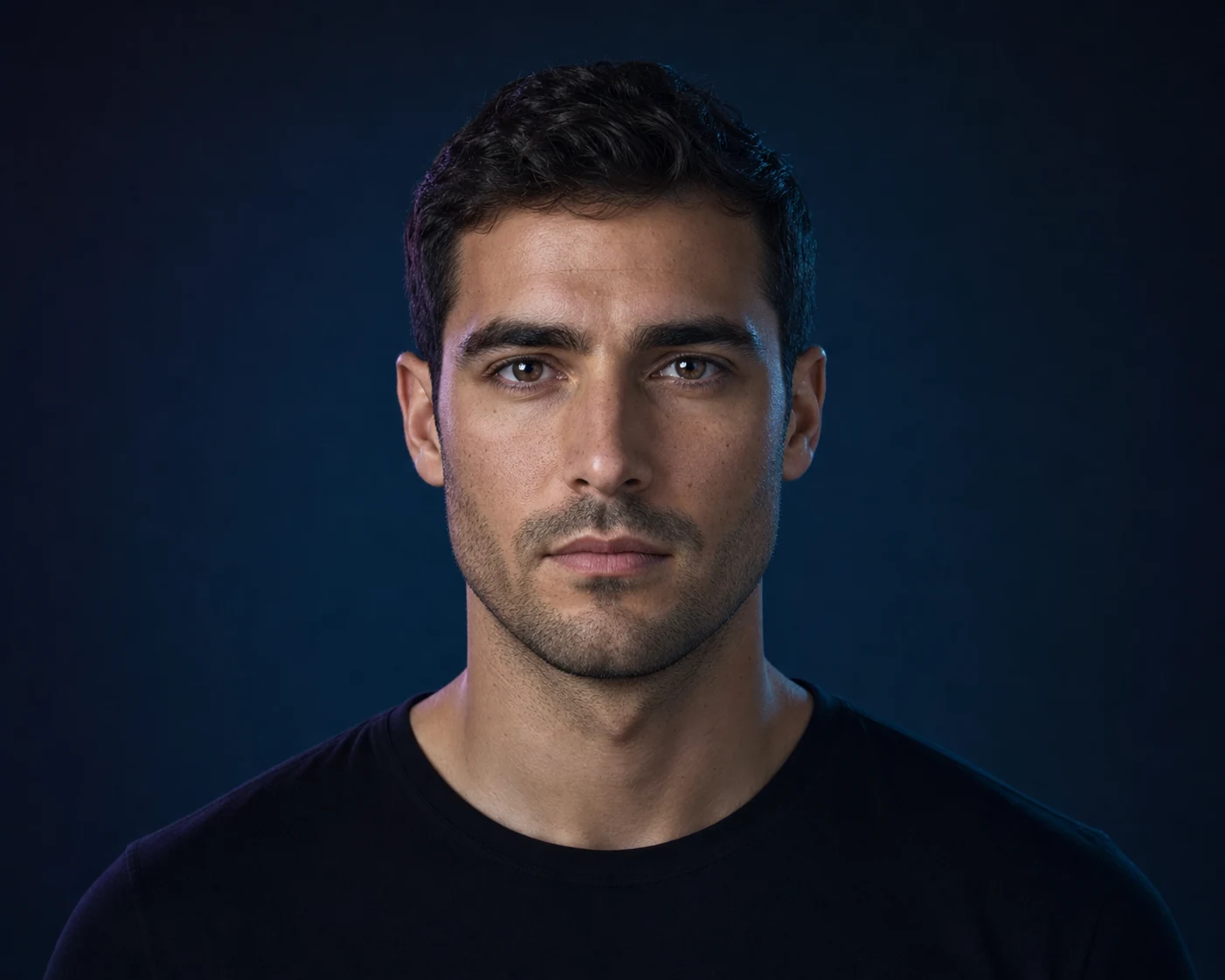
Fictional adult man in a front-facing portrait for illustrative PSL facial analysis
Fictional portrait · illustrative only

How to Read Your PSL Rating

A photo-based estimate

Real-world attraction includes expression, movement, voice, style, personality, context, and personal preference—none of which can be fully represented by one still image. Treat the result as a structured visual exercise for entertainment and self-reflection, not as an objective measure of beauty.

The tool does not separately output popular internet metrics such as hunter-eyes, canthal-tilt, lip ratings, or a golden-ratio score. It focuses strictly on the four combined categories shown below.

Consistency matters

The number can change when the input changes. A different camera lens, head position, crop, expression, or lighting setup represents a different test input. For the most useful comparison, take photos under similar conditions and read the category breakdown alongside the overall score.

The estimate is directional rather than permanent. Use the category breakdown and the consistency of the input photo together instead of chasing a single number or retesting the same image repeatedly.
How the Free PSL Score Test Works

01

Choose one photo

Fictional adult demonstrating a front-facing photo

Face the camera in even light. Use a JPEG, PNG or WebP image up to 8 MB.

02

Analyze facial geometry

Harmony35%
Symmetry30%
Angularity20%
Dimorphism15%
Category weights · not example scores

AI locates facial landmarks, and geometric rules turn their proportions into a score estimate. Your original photo stays in your browser during the basic scan.

03

Understand your result

1–8Photo-based estimate

Read your free breakdown. A paid report adds explanations, with optional extra photos for comparison.

Portrait is fictional and illustrative.

A failed PSL test result usually means the face is too small, turned too far, obscured by hair or accessories, or too poorly lit for the model to map the necessary landmarks. Try a new photo rather than treating the error as a low score.
See how the PSL score is calculated →

What a PSL Rating Result Looks Like

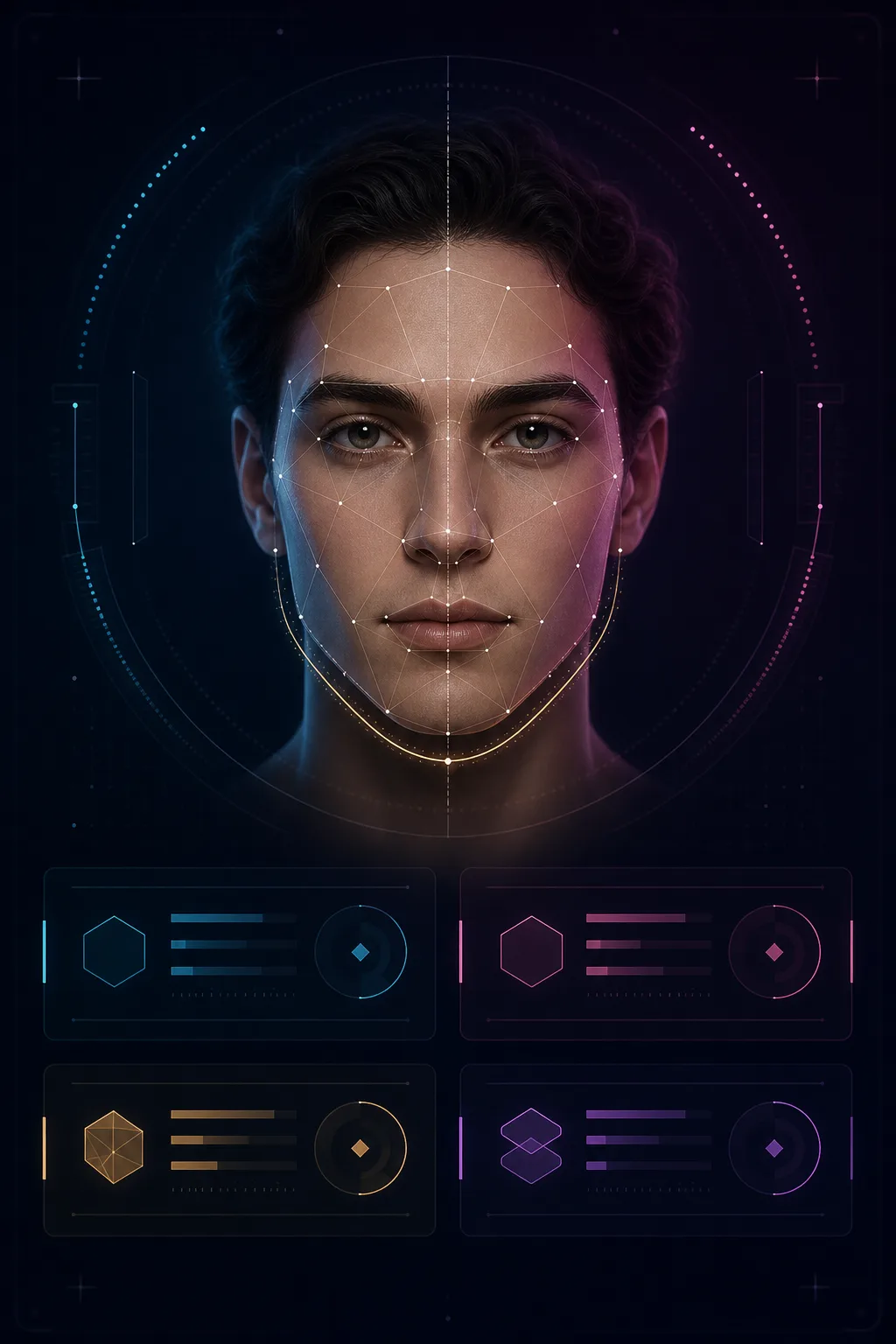
AI-generated fictional face with an illustrative PSL score analysis interface
Illustrative example — not a real user result.

Illustrative result

5.8 / 8

High Tier Normie

Harmony6.1
Symmetry5.7
Angularity5.5
Dimorphism6.0

The score is a directional estimate from one photo, not an objective judgment of identity or personal worth.

The overall number is only the first line of the result. A useful PSL rating also shows the relative category values that produced it. In this fictional example, harmony is slightly stronger than symmetry and angularity, so the tier label should be read as a compact description of the input—not as a permanent rank.

Your real result may look different because every photo contains a different camera angle, expression, crop, and light pattern. Use the breakdown to understand how the estimate was assembled, then read the complete PSL scale guide before comparing labels.

What Shapes a PSL Rating?

Our tool generates a weighted estimate across four distinct categories. Each category describes a different geometric relationship, not a complete definition of attractiveness.

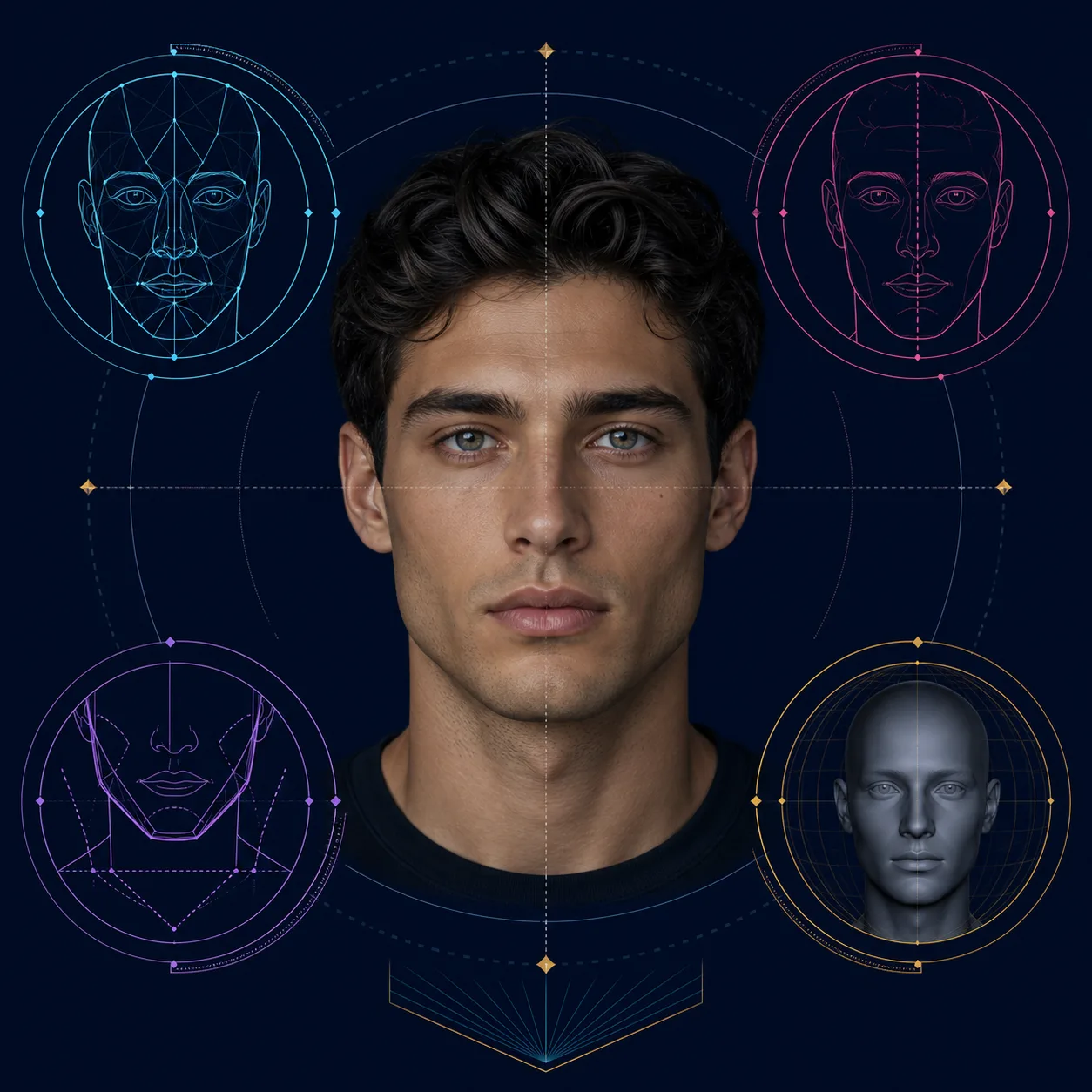
Illustrative diagram of four informal PSL rating dimensions: harmony, symmetry, angularity, and dimorphism
Illustrative rating dimensions

Harmony

35%

Harmony describes how naturally the main facial proportions work together as a whole. The estimate considers eye spacing, mouth width, nose length, and the lower-third ratio as selected geometric relationships, not a verdict about a person.

Symmetry

30%

Symmetry compares selected left and right facial landmarks, including the eyes, cheeks, and mouth. Small differences are normal; camera angle and lens distortion can strongly influence this part of a PSL rating.

Angularity

20%

Angularity refers to the visible definition and taper around the cheeks, jaw, and chin. The estimate uses jaw width relative to face width as a simple structural signal. Lighting and head position strongly influence how much structure a photo appears to show.

Dimorphism

15%

Dimorphism is a limited geometric signal based strictly on eye opening, brow depth, and jaw proportion. It does not infer gender or describe identity, personality, style, voice, or real-world attraction.

What Does Your PSL Score Mean?

The AI face rating uses an informal output range running from 1.0 to 8.0, pairing your numerical score with a community tier. These tier names are informal shorthand developed in online forums, not official clinical labels and certainly not a statement about anyone’s worth.

A score in the broad middle range of the scale might return a Mid Tier Normie label, while a result with noticeably higher harmony and defined structure might land in a higher tier. The most useful interpretation comes from the category breakdown and the consistency of the input photo together. See the full PSL tier list for every range and the photo guide for more consistent inputs.

FreePSLScore output range1.0–8.0
Community shorthand on a continuous informal scale—not a scientific standard or a statement of personal value.
5 commonly referenced tiersSelected preview from the full 1–8 scale
1.0–1.25
Very Low Range

The lower end of this tool’s output range.

2.75–3.5
Low Tier Normie

Below-average overall feature harmony.

3.5–4.5
Mid Tier Normie

The broad middle range of the scale.

4.5–5.5
High Tier Normie

Noticeably above the middle of the scale.

6.0–7.0
Chad / Stacy

Very high harmony and defined structure.

Why Your PSL Rating Changes Between Photos

It is completely normal to receive a different PSL rating when you test a different photograph. FreePSLScore calculates a directional estimate from the visible geometry in one image.

Lens distortion and distance: A close-up selfie with a wide-angle lens can distort proportions and affect the Harmony estimate.

Lighting and shadows: Hard side lighting can hide the edge of the jaw or create uneven shadows. Soft, even, front-facing light is recommended.

Facial expressions: Smiling, laughing, or clenching can move several landmarks at once. For a consistent free PSL score, use a relaxed, neutral expression.

Consistency Over Perfection

A failed PSL test result usually means the face is too small, turned too far, obscured by hair or sunglasses, or poorly lit. Rather than treating an error as a low score, try uploading a new photo with a clear, straight-on setup.

Consistency matters more than trying to find a “perfect” angle. If you compare two results, repeat the exact same camera distance, crop, expression, and analysis mode. Read our PSL photo guide for a practical checklist before you upload.

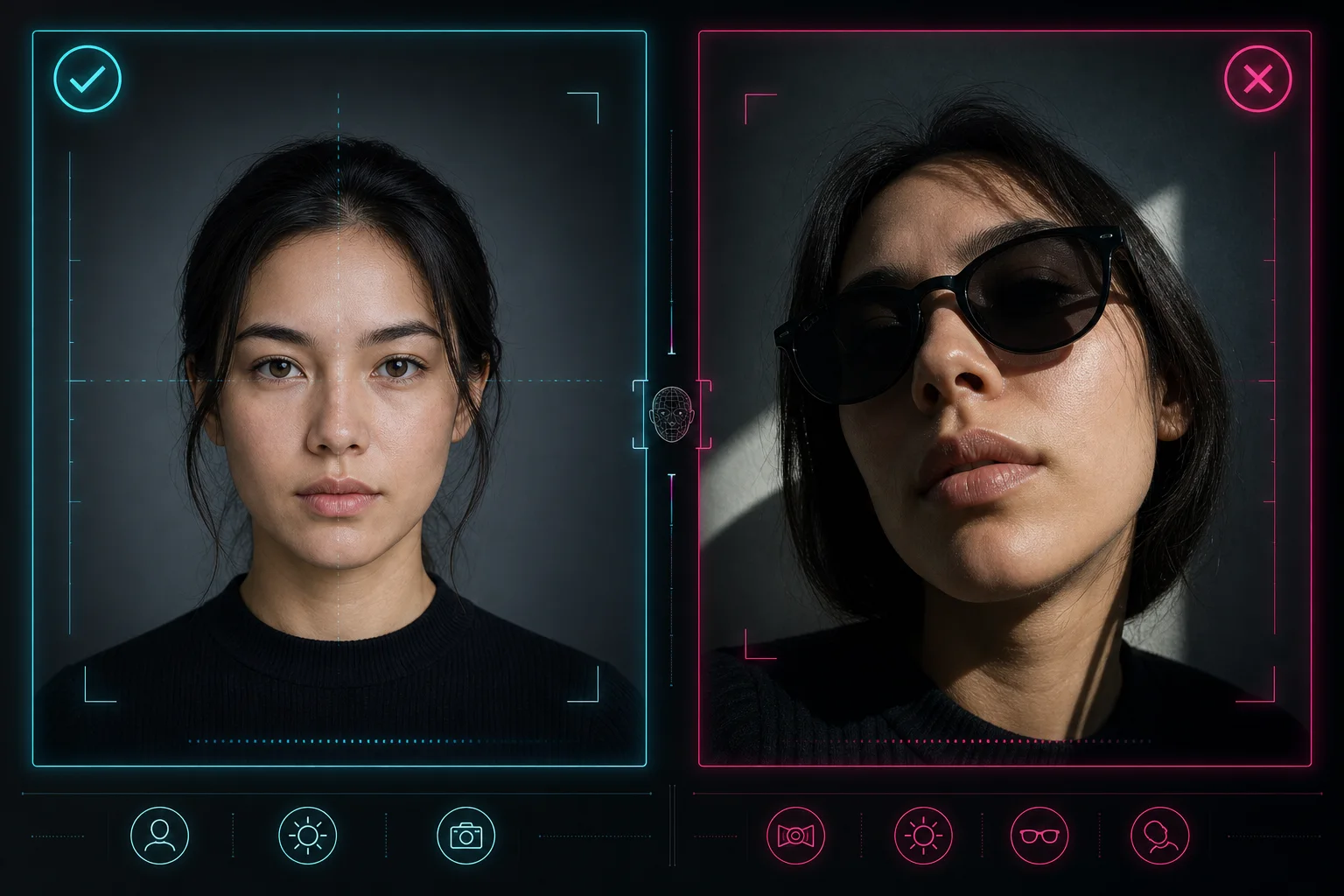
AI-generated split-screen guide comparing a clear front-facing photo with a distorted photo input
Illustrative photo input guide

Your photo stays in your browser.

The basic FreePSLScore flow is intentionally simple: select a photo, let the browser check the visible landmarks locally, and review a temporary estimate. The original image is not sent to our server or saved as a user profile. This local flow also means you can leave without creating an account or handing over a personal gallery.

For the exact boundaries of the current browser-based scan, read our privacy notice before uploading.

AI-generated browser privacy flow showing a photo processed locally into a temporary PSL estimate
Browser-based processing illustration

What Your Result Can and Cannot Tell You

Remember, this tool evaluates the specific geometric relationships present in a single photo, not an unchanging objective reality about your appearance. It cannot capture movement, voice, personality, social context, personal taste, or the way someone looks in real life.

A lower number is not a diagnosis, and a higher number is not proof of a better life or greater value. Use the result as a structured visual reference, not medical, psychological, dermatological, or surgical advice.

Free PSL Score Test FAQ

How is my PSL score estimated?

AI detects facial landmarks, then fixed geometric rules estimate four category scores. The overall 1–8 score combines harmony (35%), symmetry (30%), angularity (20%), and dimorphism (15%). It is not calibrated against human ratings or a scientific measure of beauty or personal worth.

Is the free PSL score test really free?

Yes. The basic browser-based estimate is entirely free to use. It does not require an account, subscription, payment, or credit card.

Does FreePSLScore store or upload my photo?

No. The basic free PSL face scan runs locally in your web browser. The selected image is kept temporarily in page memory and is not uploaded to or stored by our server.

Is the PSL calculator an objective measure of beauty?

No. A PSL score is a structured photo estimate inspired by internet community terminology. It is an informal visual exercise, not a scientific, objective, or medical measurement of attractiveness.

Why did my PSL test fail to generate a score?

A failed PSL test result usually means the face is too small, turned too far from the camera, obscured by hair or accessories, or too poorly lit for the model to map the necessary landmarks.

Can I use the result as medical or psychological advice?

Absolutely not. A PSL rating is not medical, psychological, dermatological, or surgical advice. A lower number is not a diagnosis, and you should speak with a qualified professional for health-related questions.

Does the AI face rating tool use the golden ratio?

No. FreePSLScore uses several normalized facial relationships rather than treating one specific golden-ratio formula as a universal standard for beauty.

Discover Your AI-Powered PSL Score

Get a geometric 1–8 score estimate and a facial breakdown from one photo. Free to try, with no signup required.

Start your free PSL testRead the PSL scale guide